
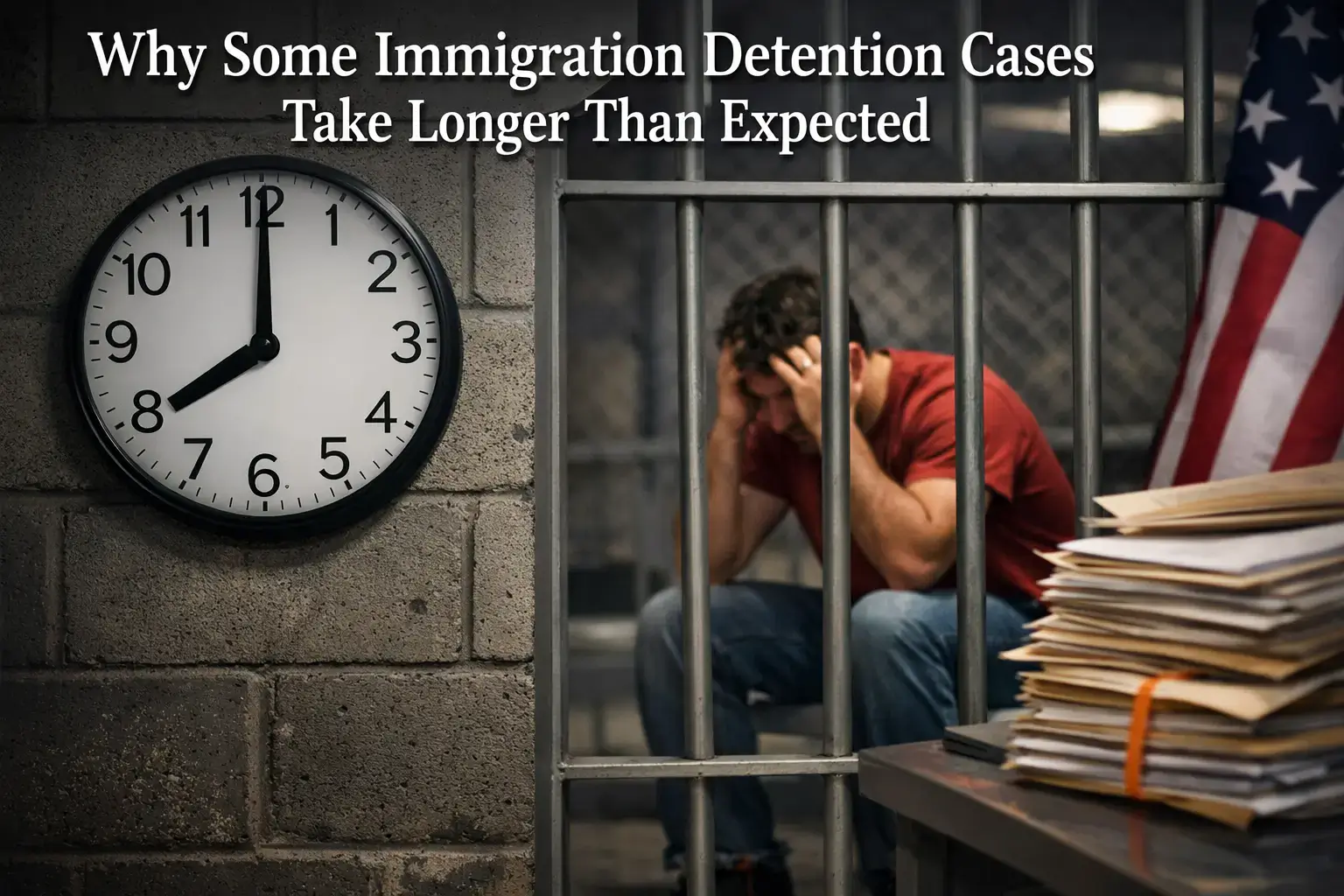
One of the most frustrating parts of immigration detention is uncertainty. Families often expect quick resolutions, but in many cases, detention lasts far longer than anticipated.
Understanding why delays happen can help individuals take the right steps to challenge them.
The Reality of Delays in Immigration Cases
Immigration cases don’t always move at a steady pace. Delays can happen at multiple levels, including:
- Administrative processing
- Court scheduling backlogs
- Transfers between detention facilities
- Additional legal reviews
These delays can extend detention even when there is no clear reason to continue holding someone.
How Backlogs Impact Detention
Immigration courts across Texas often face heavy caseloads. This can result in:
- Long wait times for hearings
- Rescheduled court dates
- Slow case progression
While cases are pending, individuals may remain in detention without a clear timeline for resolution.
Transfers Between Facilities
ICE frequently transfers detainees between facilities, sometimes across different regions. These transfers can:
- Disrupt communication with legal representatives
- Delay court proceedings
- Create confusion about jurisdiction
Each transfer can reset progress and slow down the overall case.
Administrative and Legal Complexity
Some cases involve multiple layers of legal review, especially when:
- Prior immigration orders exist
- Criminal history is involved
- Appeals are pending
This complexity can lead to extended detention while different legal issues are being resolved.
When Delays Become a Legal Issue
Not all delays are acceptable under the law. In some situations, prolonged detention may raise serious legal concerns, especially when:
- There is no clear end to detention
- Removal is not likely to happen soon
- The case is not progressing meaningfully
At this point, legal action may be necessary to address the delay itself.
Challenging Unreasonable Delays
When detention continues without proper justification, it may be possible to challenge it through federal court. This is where working with a Habeas Corpus Lawyer can be important.
Instead of waiting for the system to move forward, this approach allows individuals to question whether continued detention is lawful.
Why Acting Early Can Prevent Longer Detention
Many delays become harder to challenge over time. Taking early action can:
- Prevent unnecessary extensions of detention
- Highlight issues before they worsen
- Create pressure for faster case resolution
Waiting too long can limit available legal options.
Final Thoughts
Delays in immigration detention cases are common, but they are not always justified. Understanding the reasons behind these delays and knowing when to challenge them can make a significant difference.
With the right legal strategy, it’s possible to address prolonged detention and move toward a faster resolution.